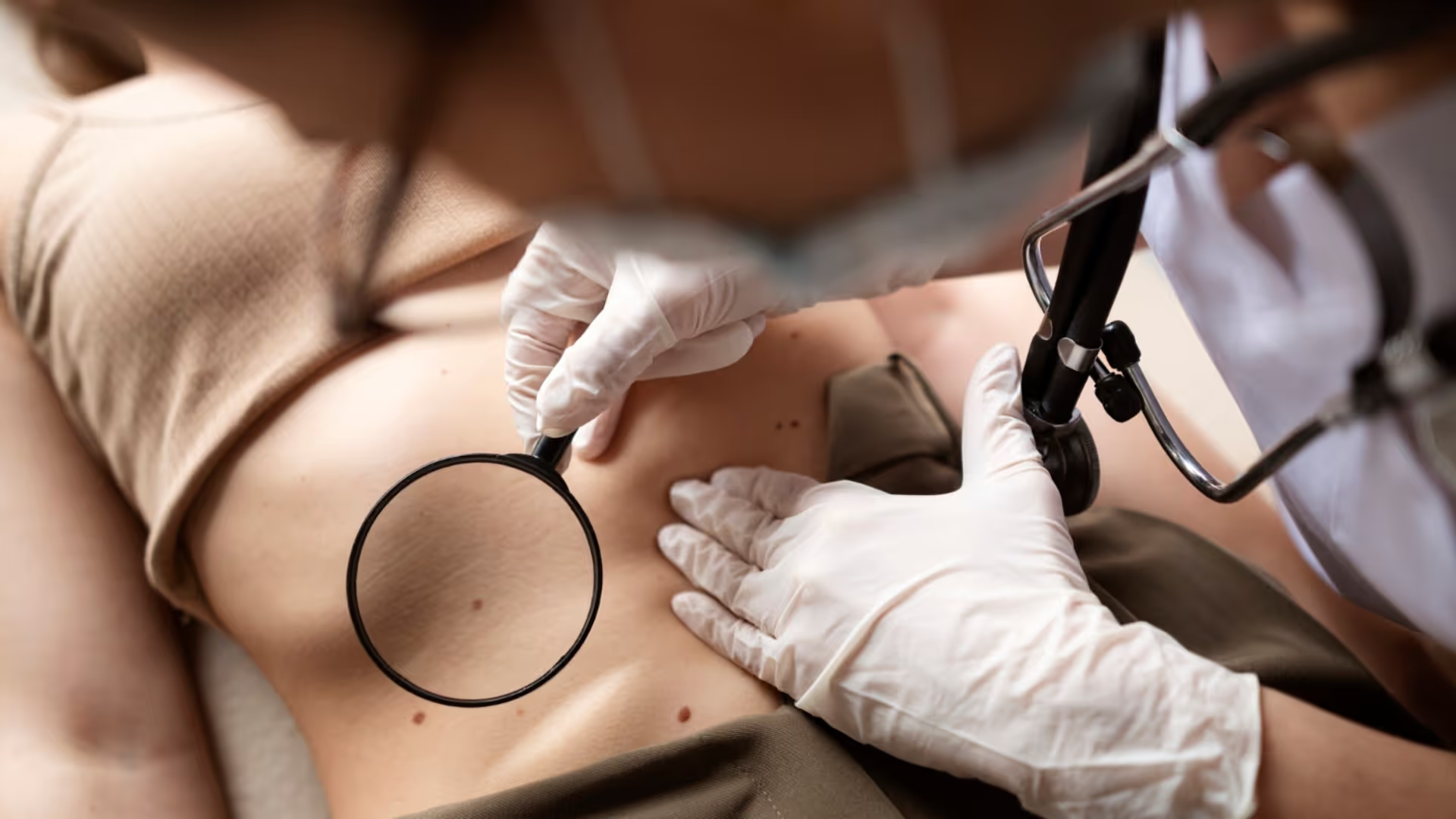
La Mohs micrographic surgery is a specialized surgical technique used to remove certain skin cancers while maintaining as much healthy tissue as possible.
It is mainly used to treat basal cell carcinomas.
This technique is particularly suitable for sensitive areas, such as the face, where tissue preservation is essential for functional and aesthetic results.
How does Mohs surgery work?
Mohs surgery is based on a simple principle: remove the tumor in successive stages, by analyzing each layer of tissue under a microscope during the procedure.
1. Excision of the tumor
The surgeon removes the visible lesion along with a thin layer of surrounding tissue.
2. Immediate analysis under the microscope
The removed tissue is frozen, cut into fine sections and then examined under a microscope.
3. Precise mapping
One detailed map of the tumor is carried out in order to identify areas where tumor cells could persist.
4. Targeted re-excision
If cancer cells are still present, only the area concerned is removed during a new surgical step.
5. Reconstruction
Once the tumor is completely removed, the wound can be closed using various techniques:
- simple suture
- local shred
- skin graft
The benefits of Mohs surgery
This technique has several important benefits:
- very high cure rate, the risk of local recurrence is less than 3%
- maximum preservation of healthy tissue, ideal for certain facial locations
- immediate control of tumor margins
These advantages make it a technique particularly suitable for skin cancers located on the face, ears, lips, or eyelids.
When is Mohs surgery recommended?
Mohs surgery may be offered for basal cell carcinoma of the face if they are:
- Sclerodermiforms (poorly delineated)
- Recidivists
- Not excised in toto after one or more conventional surgeries
- On the nose or eyelid
- Very large
- Skin cancers of the face, ears, lips, eyelids
- Recurrent tumours
- Carcinomas with poorly defined margins
- Large or aggressive lesions
This intervention requires a dermatologist-surgeon trained in this technique as well as an on-site laboratory to perform microscopic analysis in real time.
FAQ
Is Mohs surgery painful?
No The intervention is carried out under local anesthesia. After the procedure, slight tenderness may occur but it is generally moderate.
How long does the procedure take?
The duration depends on the complexity of the tumor. It usually lasts between 1 and 3 hours, including the microscopic analysis phases.
Are the scars visible?
The aim of the technique is to minimize scarring. The reconstruction is adapted to the location and size of the operated area.
Is there a risk of recidivism?
The risk of recurrence is low, less than 3%, thanks to the complete control of margins during the intervention.