How to safely remove a tattoo
Laser tattoo removal makes it possible to attenuate or eliminate a decorative, accidental tattoo or permanent makeup.
The treatment acts in a targeted manner on the pigments present in the skin, while maintaining the surrounding tissue.
Since each tattoo is different, a preliminary assessment makes it possible to assess the feasibility of the treatment and to estimate the number of sessions required.
Principle of laser tattoo removal
Tattoo removal is based on the use of a picosecond laser, which emits extremely short light pulses.
This energy fragments the tattoo pigments into very fine particles, then gradually eliminated by the body.
This technology generally allows:
- more effective fragmentation of pigments
- a more gradual and controlled elimination
- a number of sessions that are often reduced compared to old nanosecond lasers
What tattoos can be treated?
The response to treatment depends on several factors: pigment color, tattoo depth, skin type, and age of tattoo.
The easiest tattoos to treat are:
- black tattoos (depends on the age of the tattoo)
- decorative or professional tattoos
- traumatic tattoos (bitumen, powder, accidents)
- permanent makeup (PMU)
Some colors such as red, green, or blue may also respond to treatment, while other pigments, including yellow or beige, remain more difficult to eliminate.
In some cases, inks may darken after the laser impact and become more tenacious or even no longer disappear.
Course of a session
The tattoo removal session is carried out in the office and usually lasts between 5 and 30 minutes, depending on the size of the tattoo.
During treatment, patients often describe a feeling of deep tingling or burning, comparable to that experienced during the tattoo.
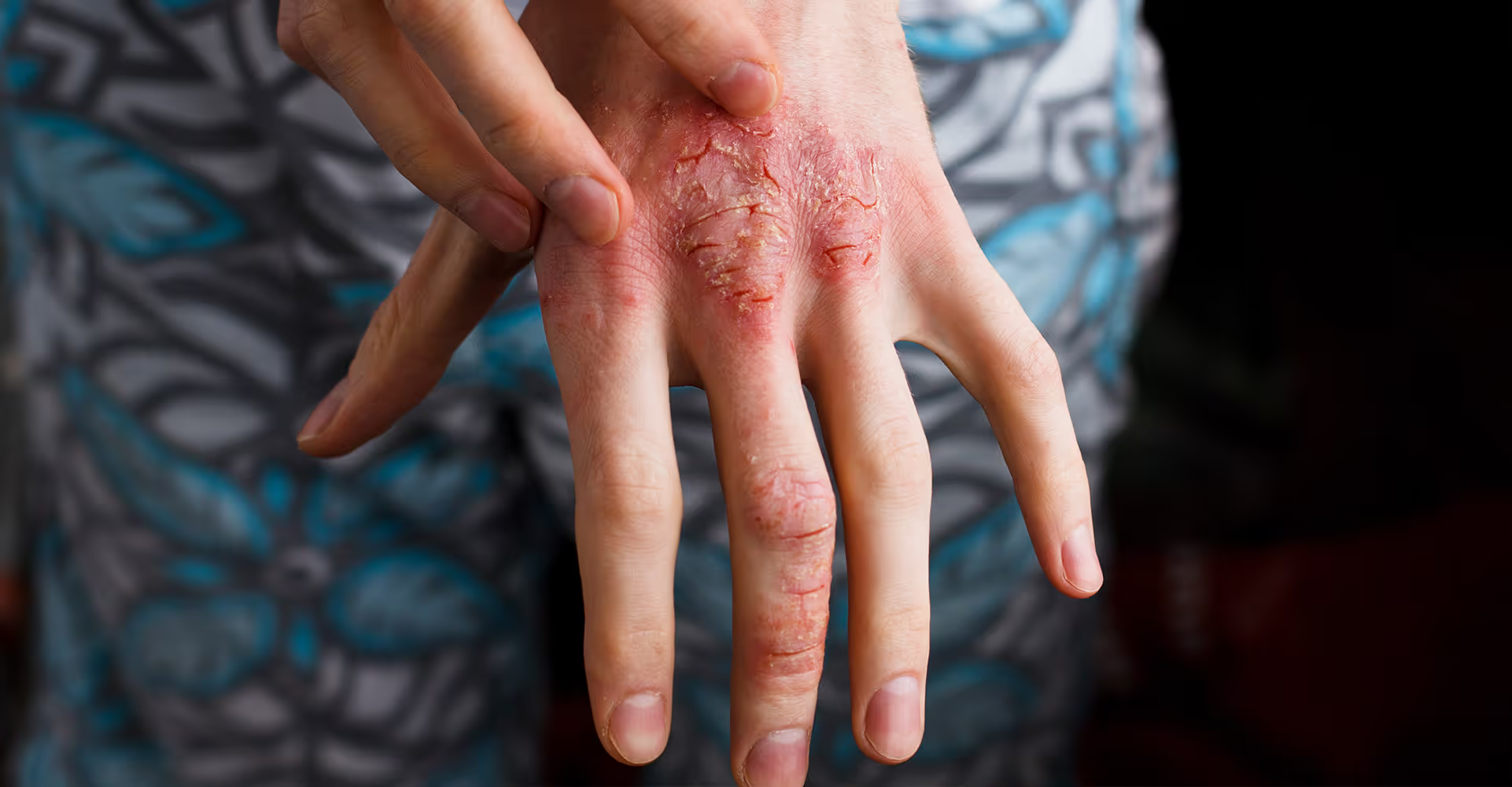
After the session, several skin reactions may occur:
- redness
- blisters
- formation of small scabs
It is important to do not scratch or pierce these lesions, in order to promote good healing.
Number of sessions and results
The number of sessions depends on several factors:
- tattoo size
- pigment depth
- ink color
- skin type
On average, 4 to 10 sessions or more may be necessary.
Sessions are generally spaced out:
- of 4 to 8 weeks at the start of treatment
- then more at the end of the protocol (approximately every 6 months)
Tattoo removal is a gradual process: it may take several months to obtain a satisfactory result.
However, the complete disappearance of the tattoo cannot Never be guaranteed.
Precautions to be respected
To limit the risks of complications, certain precautions are important:
- avoid sun exposure before and after sessions
- protect the treated area with a piece of clothing or a band-aid
- do not touch blisters or scabs
Compliance with these recommendations contributes to optimizing healing and treatment results.
FAQ
Is tattoo removal painful?
A tingling or burning sensation may be experienced, comparable to that of tattooing. The treatment is generally well tolerated.
How many sessions are required?
On average, 4 to 10 sessions or more are required depending on the tattoo (size, color, depth).
Does the tattoo disappear completely?
In many cases, it can be greatly alleviated, but complete disappearance cannot always be guaranteed.
When do we see the results?
The results appear gradually over the sessions and months, while the body eliminates the pigments.
Are there any side effects?
Redness, blisters, or scabs may appear after the session. These reactions are normal and temporary.