What is an ablative laser?
Ablative lasers are a family of dermatological lasers that allow remove the superficial layers of the skin in a controlled manner.
Some of the technologies used include:
- the CO₂ laser
- the Erbium-YAG laser
These lasers make it possible to produce a very precise skin sanding, in order to treat certain dermatological lesions while maintaining the surrounding tissue.
What injuries can be treated?
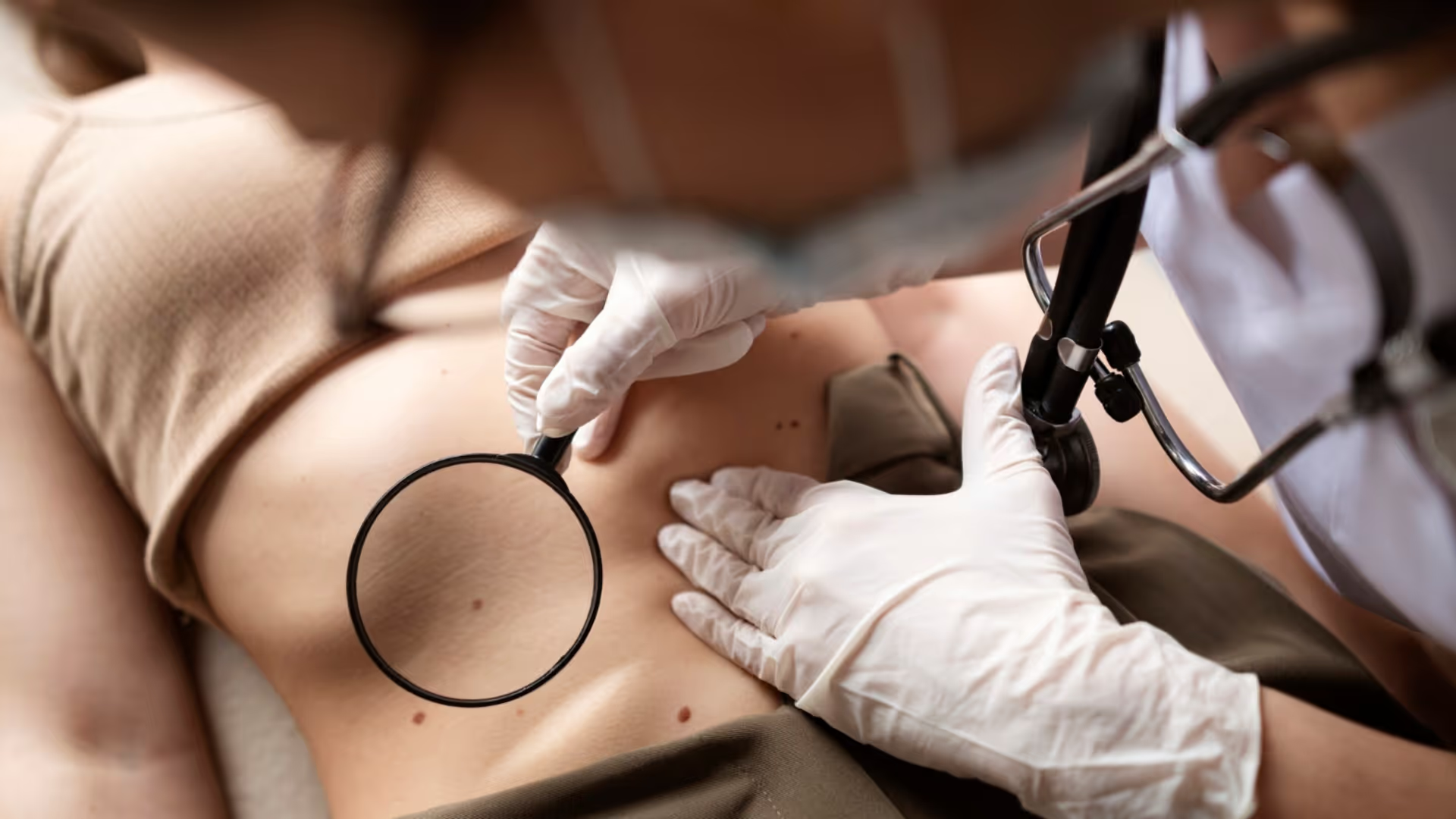
Ablative lasers can be used to treat a variety of benign skin lesions, including:
- intradermal naevi
- xanthelasma
- syringomas
The laser makes it possible to remove or attenuate these lesions in a targeted manner.
One screening assessment allows you to determine if this type of treatment is suitable for your situation.
Treatment process
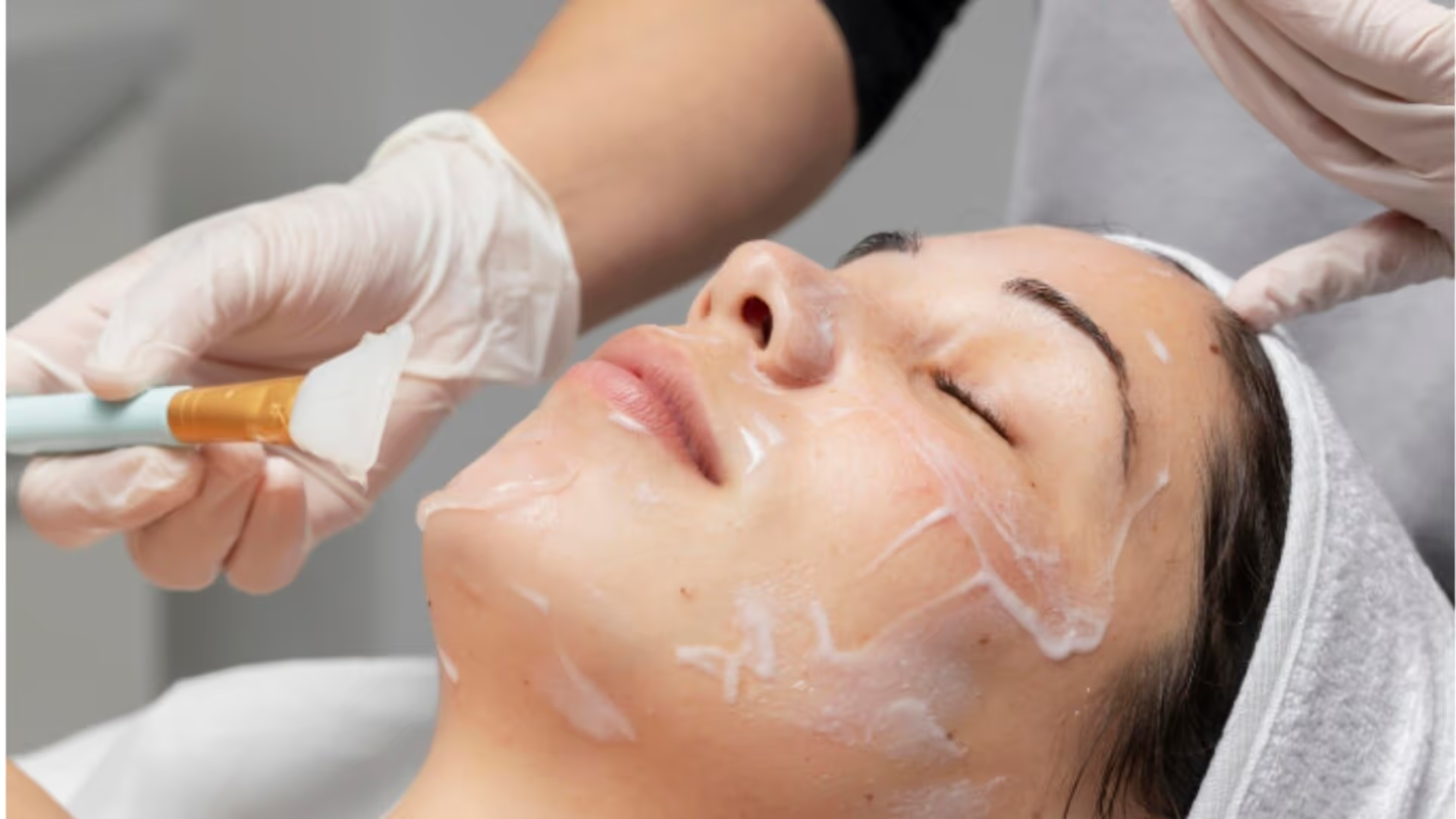
The treatment is carried out in the office.
One local anesthesia, often in the form of a cream applied about one hour before the procedure, is generally sufficient to ensure patient comfort.
The dermatologist then uses the laser to precisely sand the skin lesion.
The duration of the procedure depends on the size and number of lesions to be treated.
Aftermath and healing
After the intervention, a healing phase is necessary.
In most cases:
- healing takes about one week
- a healing cream is applied several times a day
- protection of the treated area is recommended
Post-treatment instructions are explained during the consultation.
FAQ
Is the treatment painful?
Local anesthesia is performed before the session. The treatment is generally well tolerated, with limited discomfort.
How long does healing take?
On average, healing takes about a week, depending on the area and depth of treatment.
Are there visible consequences?
Redness, scabs or slight tenderness may appear after the session. These reactions are normal and temporary.
How many sessions are required?
In many cases, a single session is sufficient, but this depends on the type and number of lesions.
What are the precautions after treatment?
It is important to protect the treated area, to apply the prescribed treatments and to avoid sun exposure.