
Melasma (pregnancy mask): understanding these brown facial spots

What is melasma?
The Melasma, often called pregnancy mask, is a benign skin condition that is frequently aesthetically annoying. It is manifested by the appearance of dark spots on the face, usually on the forehead, cheeks, and sometimes the chin.
These spots often appear in a bilateral and symmetric and may have irregular outlines, sometimes giving the appearance of a “geography map”.
Melasma mostly affects women and can appear at different times in life.
Who is affected by melasma?
Environ 90% of people affected by melasma are women.
This condition occurs more frequently:
- during pregnancy
- when taking hormonal contraceptives
- in people with dark or dark skin
- in Mediterranean, Oriental or Hispanic phototypes
Hormonal variations often play an important role in its onset.
Triggering or aggravating factors
Several factors can promote the onset or worsening of melasma.
The main ones are:
- sun exposure, which is the most important aggravating factor on which it is imperative to act
- The hormonal changes (pregnancy, contraception)
- some darker skin phototypes
Sun protection is therefore an essential element in the prevention and management of melasma.
The treatments offered
Melasma is a condition chronic and recurrent. No treatment guarantees the complete disappearance of stains.
The aim of treatments is generally toreduce blemishes and improve the appearance of the skin, while limiting recurrences.
Management is often based on a combined approach that includes:
- strict sun protection (SPF 50+), essential all year
- of topical depigmenting treatments (creams)
- of targeted chemical peels
- of tranexamic acid products
The protocol is generally adapted to each skin.
Preventing recurrences
Even after the stains have improved, a Regular prevention remains essential.
The most important measures are:
- apply a SPF 50+ sunscreen every day
- avoid intense sun exposure
- continue with recommended depigmenting treatments
These measures make it possible to limit the risk of stains reappearing.
FAQ
What is melasma?
Melasma is a skin condition characterized by brown spots on the face, often bilateral and symmetrical.
Who is affected the most?
Mostly women in hormonal periods (pregnancy, pills), especially dark or Mediterranean phototypes.
What are the aggravating factors?
Intense sun exposure, hormonal changes, and certain medications can worsen melasma.
Can stains disappear completely?
No treatment guarantees total disappearance. The improvement is often partial and requires continuous prevention.
What treatments exist?
Daily sun protection, depigmenting creams, chemical peels and tranexamic acid products.
How can recurrences be prevented?
By applying SPF 50+ sunscreen every day, avoiding intense sunlight and continuing with prescribed depigmenting treatments.
Can melasma affect men?
This is rare, but possible, especially in the event of hormonal disruptions or prolonged sun exposure.
Related services
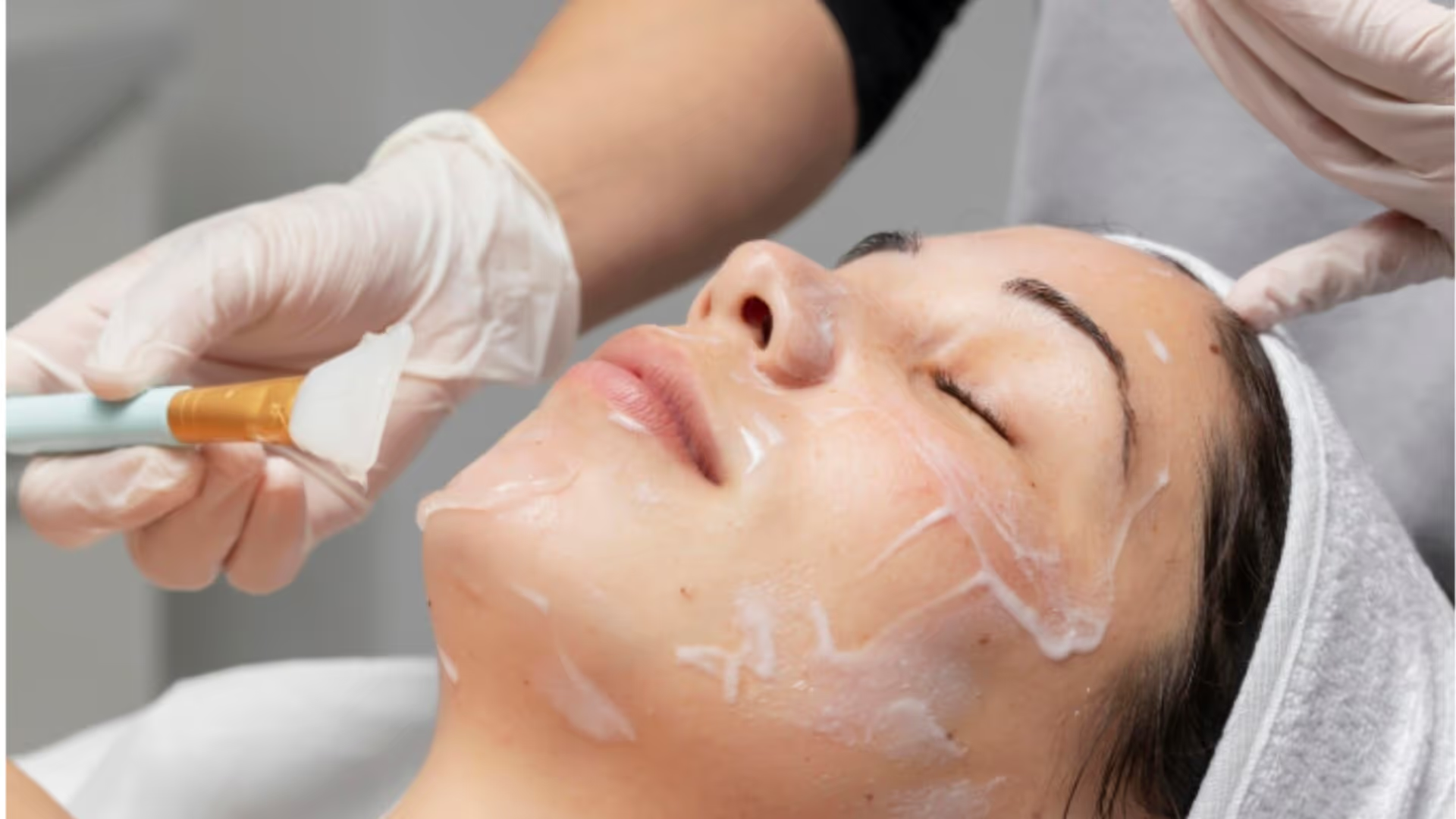
Peelings
Chemical peeling is a treatment that exfoliates the superficial layers of the skin to improve radiance, skin texture and certain blemishes.
You may also like to read


Need personalised advice?
Our specialists are at your disposal to define the protocol best suited to your needs.
