
Eczema in children and adults: understanding and treating this common skin condition

Eczema is a chronic inflammatory skin condition characterised by redness, dryness and significant itching. It can appear from a very young age or develop in adulthood.
Although this condition is neither contagious nor dangerous, it can have a significant impact on daily comfort. Appropriate management generally allows flare-ups to be effectively controlled.
Eczema in children (atopic dermatitis)
In children, eczema most often corresponds to atopic dermatitis, a condition linked to a genetic predisposition. It is frequently associated with a family history of allergies, such as asthma or allergic rhinitis.
This condition is linked to a more fragile skin barrier, which makes the skin more sensitive to external aggressors.
Affected areas by age
The locations vary with the age of the child:
In infants:
- cheeks
- arms
- belly
- legs
In older children:
- inner elbows
- behind the knees
- wrists
Symptoms
The most common manifestations are:
- red patches
- dry, rough skin
- intense itching
- sometimes oozing or crusting
Itching can disrupt the child's sleep and comfort.
Aggravating factors
Several factors can trigger flare-ups:
- cold or heat
- sweating
- certain detergents or irritating products
- stress
- more rarely, certain foods
Treatment
Management relies on several complementary measures:
- daily moisturisation with emollient creams
- topical anti-inflammatory creams during flare-ups
- use of gentle, fragrance-free products
- avoidance of irritants
Medical follow-up helps adapt the treatment as the condition evolves.
Eczema in adults
In adults, eczema may correspond either to persistent atopic dermatitis or to contact eczema.
Persistent atopic dermatitis
Some people continue to experience flare-ups in adulthood. The lesions are frequently located:
- on the hands
- on the face
- on the neck
- in the skin folds
Contact eczema
Contact eczema is a skin reaction caused by repeated contact with an irritating or allergenic substance, for example:
- household products
- cosmetics
- metals (jewellery)
- occupational products
Symptoms in adults
The symptoms are similar to those observed in children:
- redness
- dry skin
- itching
- sometimes fissures or cracks
Treatment
The management of eczema relies on several complementary approaches, tailored to the form and severity of the condition.
Basic measures
- identification and avoidance of triggers (allergy testing if necessary)
- use of soothing creams
- application of topical corticosteroids
These measures help reduce inflammation, soothe itching and restore the skin barrier.
Complementary treatments
In certain situations, additional treatments may be offered:
- phototherapy
- topical immunomodulators
These are indicated for persistent or more extensive forms.
Treatments for moderate to severe forms
For more significant forms of atopic eczema, systemic treatments may be necessary:
- biologics (dupilumab, tralokinumab, lebrikizumab), administered as subcutaneous injections every 2 to 4 weeks
- JAK inhibitors (upadacitinib, tofacitinib, baricitinib), in tablet form
Before starting these treatments, a comprehensive medical assessment is carried out, including blood tests and a request for insurance coverage.
FAQ
Is eczema contagious?
No. Eczema is a skin inflammation linked to a genetic predisposition and environmental factors.
Will my child grow out of eczema?
In many cases, childhood eczema improves with age and may disappear by adolescence. In some people, however, it may persist into adulthood.
Which products should be avoided?
It is advisable to avoid:
- harsh soaps
- fragranced detergents
- irritating household products
- certain cosmetics containing alcohol or fragrance
When should you consult a dermatologist?
A consultation is recommended if flare-ups are frequent, intense or poorly controlled by usual care.
Related services
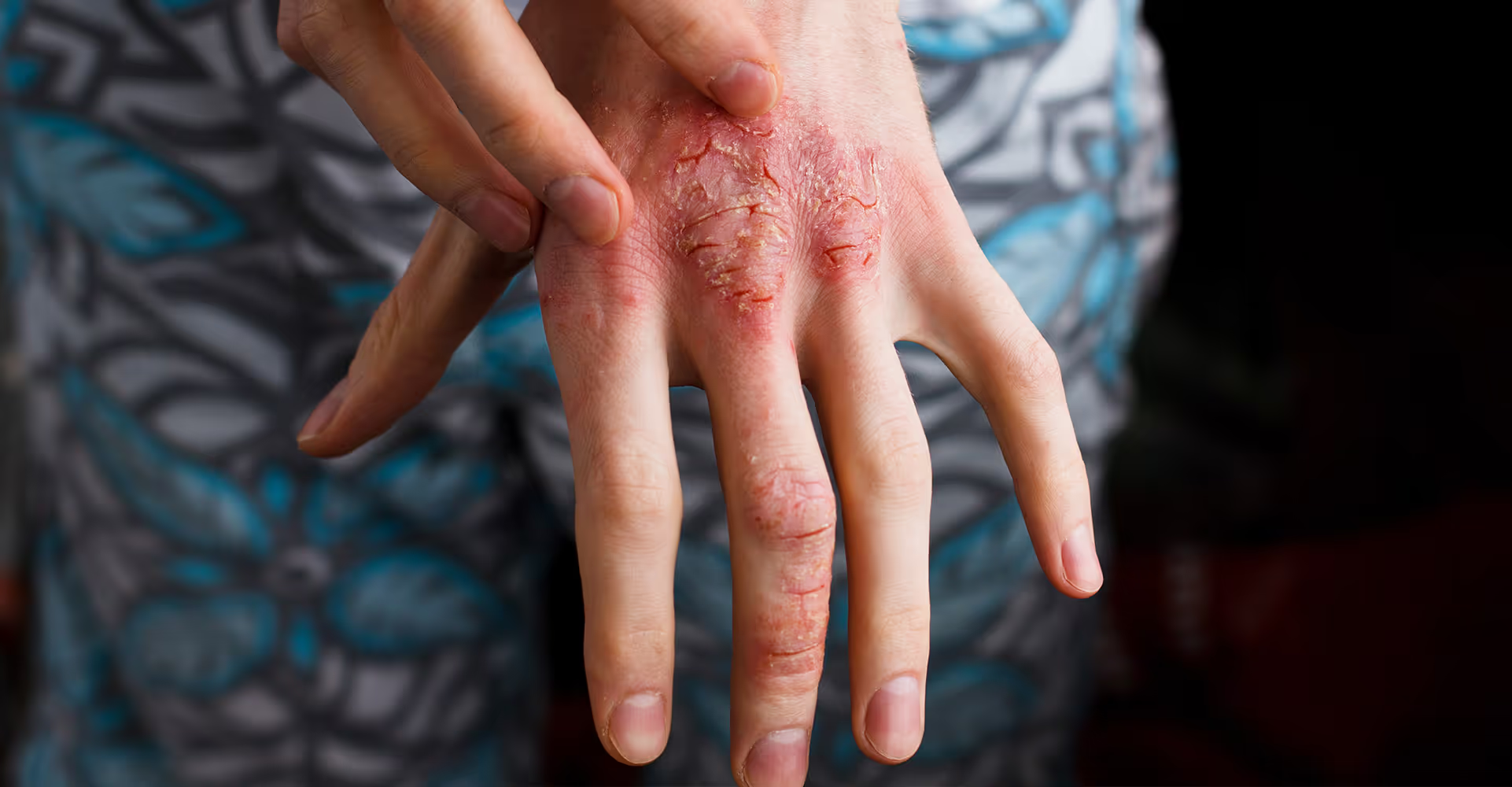
Skin allergy treatment
Skin allergies can cause redness, itching and eczema patches; a dermatological evaluation helps identify possible causes and guide appropriate care.
You may also like to read


Need personalised advice?
Our specialists are at your disposal to define the protocol best suited to your needs.
